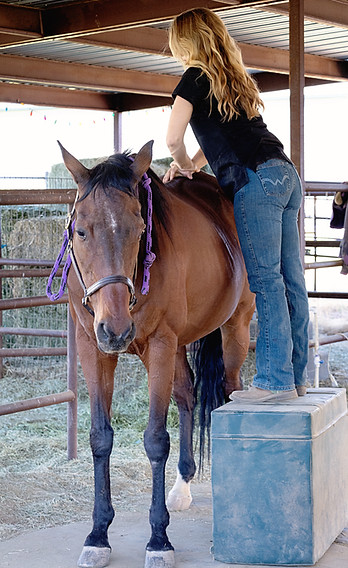
Equine Chiropractic
Horses are masters at compensating for pain. A subtle shortened stride, reluctance to pick up a lead, or a "personality change" under saddle is often the only sign something's wrong, long before it shows up as visible lameness.
Sonoran Animal Chiropractic brings AVCA-certified equine chiropractic care directly to your barn or stable, anywhere in the Phoenix metro area from Apache Junction to Wittmann and everywhere in between. No trailering, no added stress on you or your horse, just care delivered where your horse already feels at home.
Veterinary-Trained, Sports Medicine Background
Not all animal chiropractors come from the same training path. Dr. Kristen is a licensed veterinarian with a background in equine sports medicine, including years spent caring for performance horses at the racetrack before pursuing AVCA certification in animal chiropractic. That combination means your horse's chiropractic care comes from someone who understands the full picture: soundness, biomechanics, and performance, not adjustment in isolation.
Dr. Alicia, our other provider, is also AVCA-certified and brings a chiropractic-focused lens to every visit, working in close coordination with you and your horse's regular veterinarian to bring your horse's performance to its full potential.
Signs Your Horse May Benefit From an Adjustment
Every discipline puts different demands on a horse's body, and pain shows up differently depending on the job:
-
Performance & competition horses (barrel racing, reining, dressage, eventing, jumping): resistance to pick up or hold a lead, stiffness through transitions, reluctance to bend one direction, unexplained drop in performance, behavior changes under saddle (pinned ears, tail swishing, bucking).
-
Trail and pleasure horses: shortened or uneven stride, stiffness after standing, difficulty going up or down hills, general reluctance to move out.
-
Off-track and retired racehorses: old compensatory patterns from race training, asymmetry, or stiffness that didn't fully resolve after coming off the track.
-
All horses: sensitivity to grooming or saddling, difficulty standing for the farrier, uneven muscle development, or a gut feeling that "something's off" even without an obvious symptom. Trust that instinct, it's usually right.
What to Expect at Your Horse's Visit
-
Reach out: Call or text 602-603-7139, or send us a message through our contact form. Tell us about your horse, their job, and what you're noticing.
-
A little prep: Have your horse caught and lightly groomed before we arrive, and ideally on level footing for the exam and adjustment.
-
The visit: Your first appointment runs about 30–45 minutes and includes a full evaluation, palpation, the adjustment itself, and a treatment plan tailored to your horse's workload and goals.
-
Follow-up: Many horses show improvement after one adjustment; others benefit from 2–3 sessions to fully resolve a pattern. We'll talk through what makes sense for your horse specifically.
A Personal Note from Dr. Kristen
I keep two barrel horses of my own, so I understand firsthand what it means to want your horse performing at their best, and what it feels like when something's just not right and you can't quite put your finger on it. That's part of why I do this work.
Whether it's me or Dr. Alicia who comes out to your barn, your horse gets the same AVCA-certified standard of care. We hold each other to the same bar, and figuring out what a horse's body is trying to tell you never gets old, no matter which of us is there.
Need More Than Chiropractic?
For horses needing broader sports medicine support such as lameness workups, diagnostics, or treatment beyond chiropractic care, visit Sonoran Equine Sports Medicine to see Dr. Kristen's full range of veterinary services.